
Parker Gregory Brown and Zachary Levine were living the dream in Laguna Beach — oceanview homes, luxury cars, and the kind of lifestyle most people their age could only scroll past on Instagram. But according to federal prosecutors, none of it was paid for legitimately. The two are accused of running a sophisticated SIM swapping operation that drained millions of dollars in cryptocurrency from victims across the country.
What makes the case even more striking is the age of the accused. Brown, born November 30, 2005, was just 18 when the alleged scheme first appeared on investigators' radar in December 2023. Levine, born July 27, 2007, was only 18 when his involvement was first documented in August 2025. The case against Brown spans from December 18, 2023 through February 1, 2026, while Levine's alleged activity runs from August 2, 2025 to December 2, 2025.
Case Details
| Name | Parker Gregory Brown |
| Date of Birth | November 30, 2005 |
| Case Dates | December 18, 2023 – February 1, 2026 |
| Name | Zachary Levine |
| Date of Birth | July 27, 2007 |
| Case Dates | August 2, 2025 – December 2, 2025 |
SIM swapping is a deceptively simple form of fraud. A criminal contacts a victim's mobile carrier and convinces them to transfer the phone number to a new SIM card. Once they control the number, they can intercept text messages used for two-factor authentication, reset passwords, and break into cryptocurrency exchanges, email accounts, and digital wallets. The whole process can take minutes, and by the time the victim notices their phone has gone dead, their accounts have already been emptied.
Brown and Levine, barely out of their teens, are accused of doing exactly this — repeatedly and at scale. According to court filings, the pair targeted individuals known to hold large amounts of cryptocurrency, gathering personal information through social engineering, data breaches, and contacts within the telecom industry.
How the Scheme Worked
Once they had enough information on a target, investigators say the pair would execute the swap — porting the victim's number to a device they controlled. From there, they moved fast: resetting passwords, logging into exchange accounts, and transferring crypto to wallets under their control. The stolen funds were then shuffled through a chain of wallets to obscure the trail before being cashed out.
"These individuals treated other people's life savings like an ATM. The speed and precision of the attacks shows this was not amateur work."
Prosecutors allege Brown's involvement stretches back over two years, beginning in late 2023 when he was still a teenager. Levine's documented activity is shorter — a roughly four-month window in the second half of 2025 — but investigators say the damage was significant. Victims were spread across multiple states, and some lost six figures in a single attack.
Living Large in Laguna Beach
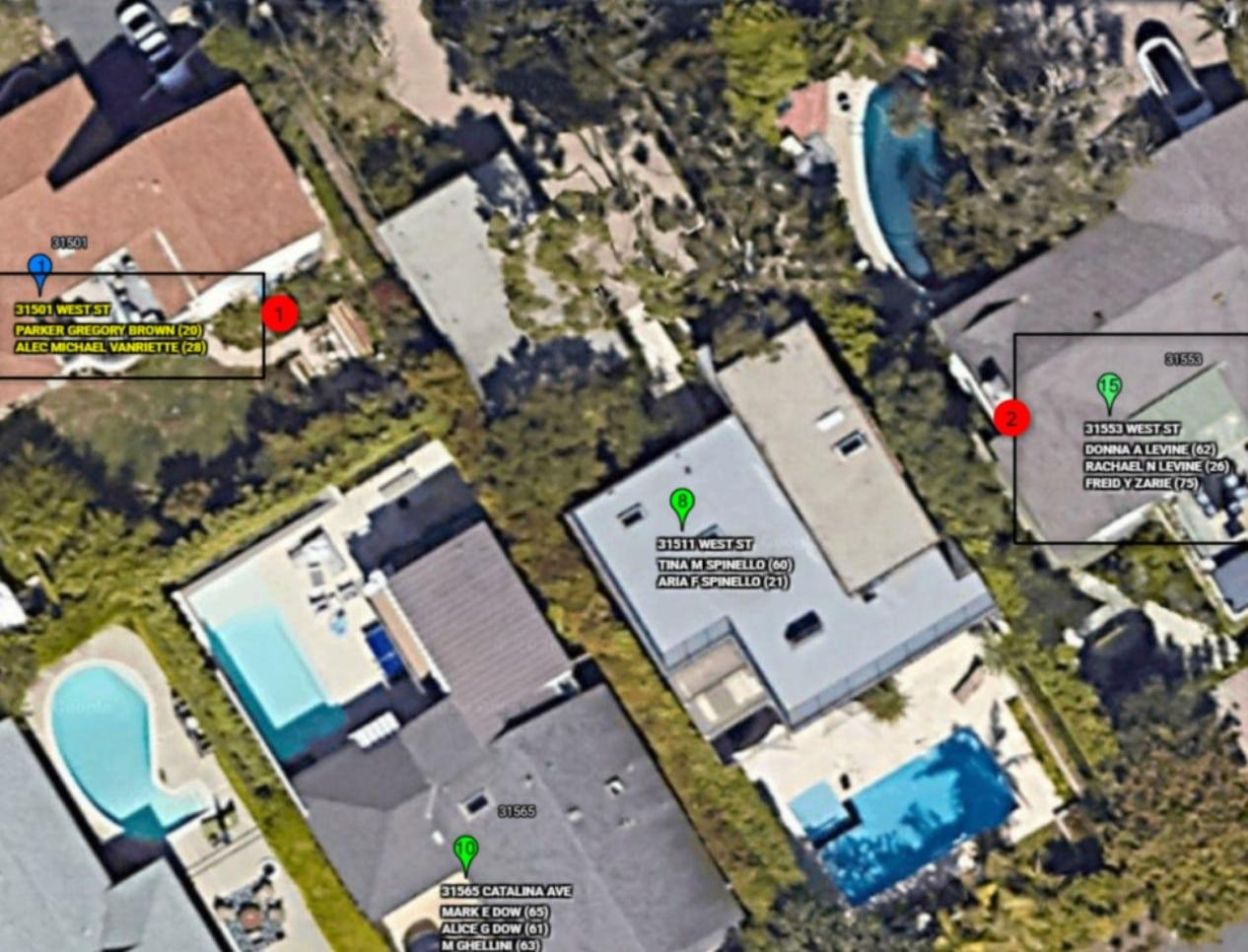
So where did the money go? According to authorities, Brown and Levine poured their illicit earnings into real estate and luxury goods in and around Laguna Beach. The two allegedly purchased multiple houses near each other in the coastal community, establishing themselves in one of the most expensive zip codes in Southern California. Neighbors reportedly had no idea how two young men could afford the properties.
Beyond the real estate, investigators say the pair spent freely on high-end cars, designer goods, and travel. The lifestyle was flashy enough to draw attention, but not so outrageous that it immediately raised red flags — Laguna Beach is no stranger to young money.
The Investigation
The scheme began to unravel when multiple victims reported large cryptocurrency losses tied to SIM swaps, and digital forensics traced the activity back to the same geographic area. Federal agents worked with blockchain analysis firms to follow the money through a web of wallets, eventually linking the funds to purchases made by Brown and Levine.
Both men now face federal charges including wire fraud, aggravated identity theft, and conspiracy. If convicted, they could face decades in prison. The properties and assets purchased with the alleged proceeds are subject to forfeiture.
Their case is part of a growing wave of SIM swapping prosecutions as law enforcement catches up to a crime that has cost victims hundreds of millions of dollars in recent years. For the residents of Laguna Beach, it was a reminder that not every fortune along the coast was built on anything real.